Friday, 5 February 2010

It's hard to believe my hand-writing could look any worse................

February 5th
Although the work in the labour ward is very rewarding, I have been looking for ways to add a more lasting value to maternity and the hospital in general. With this in mind I have agreed to teach a module to the 2nd year students in the Gimbi hospital nursing school. I have to apologise that the module is known as the "OR module" rather than by its full title "Provision of pre, intra & post operative nursing care"- yet another Americanism but entirely understandable as the theatres here are known as the OR (Operating Room).
There are a number of nursing schools in Gimbi and unfortunately some of them work on the principle that if you pay a fee you should get a diploma with no emphasis/requirement that this process involves learning anything. This can result in a poor standard of nurses applying for positions in the hospital and it can be difficult to tell. A good from a bad diploma .I should also point out that the midwives I might have written about in previous blogs are not midwives in the way we think of midwives, but are nurses (usually the brightest and best) who through sponsorship by Maternity Worldwide have been able to do a short course on midwifery to give them more understanding of labour and delivery. Thus having a poor quality of nurses will result in problems finding the midwives of the future for Gimbi.
To try to circumvent this problem the hospital decided to set up it's own nursing school where a better quality of graduate could be guaranteed and through donations specifically for this purpose to Adventist International they are in the process of building a new brand new school although classes have been running for three years in older buildings. The fees charged for the hospital school are low compared to most schools and it is made clear to applicants and to the students at all stages that in order to graduate both attendance and performance are required.  The presence of a school also allows the hospital to sponsor people who come to work as practical workers (similar to what are called healthcare assistants in the UK) and are good at their job.
However I am told, there have been stormy times over the past two years with occasional small student rebellions over the high expectations of the school. The last one was over anatomy textbooks provided for each of them by a previous"faringe" lecturer that they were expected to read. It required the head of the hospital to explain to them the reasons for the school wanting them to have real knowledge and skills (the argument is strengthened by the fact that currently Ethiopia is producing a lot of nursing graduates and there are unlikely to be jobs for all of them). A refund was offered to students who wanted to leave. Three students chose to leave and all are known to have enrolled in the worst "diploma for cash" school (where 2-hour lessons last 15minutes) so all in all everyone is happy!
There is a requirement from the Ethiopian Government that the course is taught in English and they also set a detail curriculum (which at this school is followed properly). My module is sixteen 2-hour lessons which as this is not an area where I can "wing" it, require quite a lot of lesson prep but I am learning all sorts of things I probably should have known about such as infection control and other topics. Teaching the students here is very hard work. Their education to this point has been "Victorian- style" i.e. teacher stand by black-board and writes list, student memorises list and recounts with no requirement for understanding or any encouragement of any sort of creative thinking or problem solving. Unfortunately being a good nurse doesn't require list memorisation but the ability to problem solve and particularly to do this in a rapid way and also in the face of a rapidly evolving clinical deterioration. I am drawing on every resource from my "Teaching the teachers" courses to try to engage them, get them to interact and to engender thinking behaviour rather than rote learning. Add to this the very mixed ability in English and sometimes the problems can feel insurmountable but I am not one to be beaten and I take solace from the fact that although I am not sure how much is going in, they all in their different ways seem to be enjoying the classes (done 4 now) and the attendance is better than I would expect from students in the UK.
If I learn nothing else it will be an appreciation of my medical students in London who can be persuaded to think and actually object to having to rote learn. It has also reminded to me that bad handwriting looks even worse in cheap chalk on a blackboard.

Tuesday, 2 February 2010

Is there any option but to go along with it?........................

February 2nd
So I am into my second month in Ethiopia (both in calendar terms and also this is day 29 of my trip). There are so many things to write about that it is always difficult to know where to start but I have decided that today I will write about the wards.
The wards are strictly single sex (well this is as far as patients go) which considering there are no curtains between the beds in the ward at all it would seem just as well. The men's ward is on one floor and the women's ward (where the women I look after are cared for is on the floor below next to the four bedded labour and delivery area). There are officially 29 beds but extra beds often supplement this number as the solution to capacity issues is very simple - they just bring more beds into the ward (if only addressing capacity were so simple in the UK!). The beds are very close together with barely enough space to get along side them to examine the patient especially at the times when extra beds have been brought in. The ward takes maternity, gynaecology, surgical and medical patients. This is an issue as the medical women may be having treatment for TB or other infectious diseases, which is a significant risk for a newborn baby. There are three bays and the nurses are strict about ensuring that the majority of mothers and babies are in the first bay and the majority of medical women are in the third bay with the second bay being the first place for surgical and gynaecology women, this creates some barrier but of course women and babies do go into bay 2 when it is busy.
The ward is full already but then visitors swell the numbers. further These people are entirely necessary as they provide care for their sick relative in helping them mobilise to the toilet, washing and feeding (the nurses do not expect to or have time to provide this sort of care and there are no Physios or OTs here). The relatives also go to the market and purchase food for the women (a very rudimentary ration is provided twice a day by the hospital which makes NHS portions look positively generous) and will also go to pharmacy to purchase drugs & IV fluids that are prescribed (if they are not a maternity patient with a voucher). The other issue for visitors is that home may be many hours away and although there are hotels in town the chances that they can afford a hotel and the hospital charges for their relative are slim. Thus the relatives are present all day and all night. Going to the ward after 10pm is a source of amusement to me as there will be at least two people but often three people in every bed with additional people sleeping on the floor and on the benches in the communal areas outside the ward. I should point out that there are no cots for babies and these sleep in bed with the mother as well as the other relatives. Fortunately as previously described Ethiopian people are lean or otherwise there might be more issues related to these sleeping arrangements (sadly we did have a healthy baby die in the night 2-weeks ago as the mother accidentally rolled on to it in her sleep).
There is a clean sheet and blanket provided for each bed on admission by the hospital (well most of the time-unfortunately there are significant issues of linen going "missing" in the laundry so that it is not uncommon to run out.) Due to the fact that these are donated from a variety of sources I am not sure I have ever seen two sheets or blankets the same yet (or a sheet without holes).  Add to this the fact that all the beds are different (many over 20years old but still with working back rests and raising mechanisms- they don't make them like that any more) and it does mean that the ward have that slightly disorganised appearance  reminiscent of the pretend- hospitals I used to create as a child, when the beds & covers for my doll patients were whatever I could get hold of.
The biggest issue on the ward that I still find difficult to deal with on a day-day basis is the lack of privacy for the women. At ward round times all the visitors are banished from the ward (and they obey unquestioningly) and the doors are locked but at any of the windows there will be a crowd of faces peering in. There are curtains but these are rudimentary and certainly do not stop every prying eye. On the ward round "intimate" examinations (I will leave to your imaginations as you know I look after obstetric and gynaecology patients) may be undertaken which the women seem to accept as entirely normal without any concern for who is watching. These sort of procedures also occur outside the ward rounds when the ward may be full of visitors and no one seems to think it inappropriate to carry on. The nurses have got used to the fact that other than in an emergency I will take the woman into one of the obstetric observation beds to be examined where there will be a maximum of one other woman (and no visitors) present during the procedure, however they clearly consider it rather eccentric and unnecessary.
I realise this lack of privacy and dignity all poses an ethical question about my being complicit in perpetuating this behaviour but given the ward environment there doesn't seem to be any option other than to go along with it . There is no doubt the women consent to be examined in this way never showing any hesitation but I suspect that they feel like me that there is no option that to go along with it and unlike me they do not know that anything else is possible.

Saturday, 30 January 2010

Anyone for Valpolicella and lentils?.........

January 30th
I mentioned previously that the diet here can be poor and it takes effort to ensure you eat properly. The local people vary in body shape due to different tribal origins but the one thing that they have in common is that they are all extremely lean. The average weight of women in the antenatal clinic is 50kg (and they are often at quite an advanced stage of pregnancy). It does make the management of problems easier (you can feel which way round a baby is and scan with a much higher accuracy with no body fat) and certainly the anaesthetics are easier because all the women are so slim. In the UK we use an aid called a "Pat-slide" to move women off the operating table but thus far nothing has been needed to help move a patient (with the one exception where it was all hands on deck).
One effect of the diet is that iodine deficiency is very common and so goitres (a swelling in the neck due to an enlarged thyroid) are almost universal.  Likewise although I have not seen it yet spinal bifida in newborn babies is more common due to lack of folate (there are no folate supplements recommended routinely here).
The poor diet is mainly a result of a lack of money to buy food but also the fact that the traditional diet is very low in fruit and vegetables (with calories/protein coming from a grain called Tef made into a rubbery unleven bread called injura, served with oily stews of meat or pulses). In fact the market has a good range of fresh produce depending on the season. Currently red onions, tomatoes, avocados, (with the largest stones you have ever seen but as they are only 1burr (5p) for 3, you are getting what you paid for) potatoes, carrots, bananas (2-types), oranges, limes  (that they call lemons) and fantastic large papayas are plentiful and I am told these "staples" are available all year round. With quality and price varying according to how abundant they are. There are two green vegetables that you can get hold of the are both called "rafu" one is recognisable as a sort of white cabbage and the other is a bit like spring greens (but very bitter).  You can also find pumpkin (sold in slices) and beetroot (unfortunately they discard to beet tops). I managed to get some green beans this week but these are seasonal and considered very expensive at 10burr (50p)/kg. The other problem for the local diet is that any fruit and vegetables they do eat are cooked for a long time, a habit I assume that developed to avoid food poisoning but unfortunately destroying important vitamins.
I have seen no evidence of meat in town but am told if you want it you can find it but that it is very tough by western standards. Ethiopians are meat eaters if and when they can afford it (they even eat raw beef with a resultant tape-worm problem). I made the decision to eat vegetarian in Gimbi (as I think it is easier to avoid stomach upsets) but I will be looking forward to a steak when I get to Addis in a couple of weeks.
My diet here is pretty healthy as unlike Ethiopians I am going out of my way to get a good variety of vegetables. One of the gardeners in the compound grows lettuce so it is even possible to have a carefully washed salad (lettuce, white cabbage, tomatoes, beetroot and avocado). I have also managed to find a number of different ways to cook all of the available vegetables, this is helped as chillies, and garlic and fresh ginger are also widely sold in the market. I have learned to like to lentils, which is fortunate as these are my main source of protein although there are also excellent (if very small) eggs available for baking and omelettes. I have a cook (Tadilho) who sadly doesn't seem to want to make Ethiopian food even occasionally however much I ask but I have persuaded her that chilli is fine and so her lentil stew (with extra added vegetables) is not quite a gourmet meal but something I can look forward to. She makes good (slightly sweet) bread and excellent carrot cake so this is preventing me from loosing a lot of weight. There is also no dairy available, which is a bit of a mystery since there are goats and cows galore roaming the streets of the town. If you want milk it comes in the form of dried "Nido" (the wonderful Nestle monopoly on the African market means that a small tin that makes 10lites of milk is 140burr-£7, which is a fortune here in real terms). So I use it sparingly in porridge and I also treated myself to homemade rice pudding one night (which was really good). You may wonder about the term "sparingly" as I know that I can afford dried milk but it is amazing that surrounded by so much need you become acutely aware of what you spend on food and you also become obsessed with ensuring that absolutely nothing gets wasted, planning meals to reuse left-over's and to eat anything that might be nearing the end of it usable life.
Finally, no alcohol for three weeks, which as many of you know a record for me as I suspect that the last time I abstained for this length of time, was before I went to college i.e. when I was eighteen. There is beer available in town but the establishments are not very conducive to a quiet beer and as the majority of the other "faringe" are Seventh Day Adventists (who don't drink, smoke, eat meat or have caffeine if they are doing it properly- although they are not evangelical and intolerant of all of these behaviours in others) there is no one to go with me. The good news is that my alcoholic fast ended yesterday as Tekle (the local Obstetrician) brought me a bottle of Italian wine when he returned from Addis. It is much better than expected but then after three weeks I'm not sure I can be relied upon for my wine criticism as I may have a temporary bias. I am planning to make the bottle last as I don't drink when on-call (alternate nights now) and I think that 1-2glasses is all I really need to wash down spicy lentil stew!

Wednesday, 27 January 2010

That's an awful lot of nothing................

January 27th
So before you all think that I am already getting remiss in my blog updates, we have had a period with no internet connection. It seems that Ethiopia telecom is just like the trains in the UK and the slightest inclement weather takes the lines downs (or something of that sort anyway). I was told it was the dry season (which should last until end of April i.e. long after I am back in the UK- thus I came with no clothing for wet weather. No doubt someone in some meteorogical department will say that it is due to global warming but we had 2-days of intermittent torrential rain- there is no doubt that these 2-days left me relieved that I am not here in the wet season. One return trip from my bungalow left me soak to the skin (in spite of a plastic apron to make me both look like a local using whatever is to hand and theoretically to offer some degree of rain protection), thankfully "scrubs' & Crocs (which are standard wear for work here) dry out very quickly.
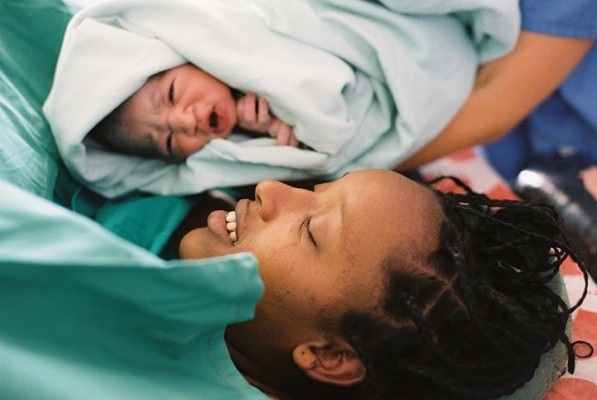
So back to life on labour ward in Gimbi. Monday presented me with my biggest challenge yet- this is meant in both a literal and a metaphorical sense. Late in the afternoon, a woman was transferred from the Government hospital in Assossa which is 5hours drive (300km) further west almost on the Sudanese border. A brief letter presented the facts that they had tried to delivery her by caesarean section (reason for caesarean not given) under general anaesthetic and that she had had a cardiac arrest but been resuscitated and they had abandoned the planned operation and transferred her to us. What the letter didn't say (but perhaps they felt it unnecessary as it was immediately apparent on looking at her) was that she weighed 150kg. This is the sort of weight that in the UK creates comment but we do deliver women who are very overweight relatively often but here where the women of all ages are all incredibly lean and have no body fat at all (there is the occasional wealthy person who might be reaching a BMI at the upper limit of normal) this woman was massively obese. Being this overweight is a health issue in the UK in spite of having special equipment (hoists and a bariatric operating table) and extremely experienced anaesthetist who will see the woman and careful plan the anaesthetic to try to make it as safe as possible.  So you can imagine the issues involved in caring for a woman of this size here, the only good news was that looking at her it seemed unlikely that she had had a genuine cardiac arrest as she was well in herself. The reason that they were going to deliver her was because she was in very early labour having previously had a caesarean section and they suspected she was carrying a large baby. I agreed with their suspicions about the size of the baby but of course the accuracy of clinical examination in this situation can be poor (the faithful scan machine was not able to add any information in a woman this big). So I bad a dilemma- should I let her labour and wait to do an emergency caesarean or just get on and do it now whilst there was no apparent urgency? On balance I decide to go for the latter option on the basis that it would be safer for her- the risks of the whole situation were explained to her and her family (or at least something was said).
In this situation it is the anaesthetic that is the issue not really the surgery (which is just more difficult) and so this was a serious challenge for Abate the nurse-anaesthetist. He tried a spinal anaesthetic but the needle wasn't long enough to reach her spine (we have special long needles in the UK) and so he was forced to give her a general anaesthetic.  Obesity makes this particularly dangerous as it is difficult to get the tube into their airway that is required to allow them to breath (they have fat, swelling and relatively shorter necks due to their body shape) and this is something that you only get one attempt at. Thankfully he managed to get the tube in place first time although her oxygen levels did fall to an alarmingly low level very briefly (which we suspect is what happened in Assossa resulting in them panicking and abandoning the operation).
So I was able to do the caesarean and delivery a large 4.5kg (9lb9oz) baby who has the body fat distribution of a laughing Buddha. This is a very large baby for here where the average birth-weight is about 3kg (6lb6oz) and the appearances all suggest that the mother had diabetes in pregnancy which would be in keeping with her weight. The operation was uneventful other than having to finish the skin with local anaesthetic as she was waking up and in the circumstances giving more general anaesthetic was not an option.
Thankfully 35hours on she is doing remarkably well and is mobilising better than an equivalent woman would back home. Her baby has a few feeding issues (unusually she is refusing to breast feed which only the very wealthy do here as formula milk cost $16 a tin).
I couldn't help but ask the midwife to ask her what she ate as on the basis of the diet I am eating here it is difficult to maintain weight never mind gain to any degree. The midwife asked her, she responded in a serious way and the midwife smiled and translated "she says she eats nothing doctor"!

Sunday, 24 January 2010

Gimbi bibles..............

January 24th

There is no such thing as anomaly scanning here and so I had been a bit surprised not to see any abnormalities in the babies so far.
That changed overnight last night as there were two babies delivered with problems that in the UK would have been diagnosed before birth thus allowing a plan to be made for management after birth or allowing the parents to consider the option of a termination of pregnancy (depending on the stage of the pregnancy and the nature of the abnormality). Termination of pregnancy for severe abnormality is also legal in Ethiopia although in the absence of any scanning I assume this is rarely undertaken.
The first baby has a cleft lip and palate on one side (they can be in the midline or on both sides which is worse). The problem with this is that babies require an intact palate to be able to create the suction needed to breast-feed and also to prevent them accidentally breathing the milk in (aspiration) during feeding. In the UK this is all addressed by regional cleft lip and palate teams who spring into action when a baby with this problem is born and use a variety of devices to make sure the baby is able to feed. Of course here there is nothing locally- there is a hospital in Addis called the Cure Hospital that specialises in paediatric problems like this and will treat the babies for free but this is only possible if we can manage to keep the baby well enough to travel and undergo surgery, thus the challenge at the moment is to try to get the mother to learn to feed the baby via a naso-gastic tube, simple enough in a clean environment but here the big worry is infection and gastroenteritis.
The second baby has bilateral talipes (we used to call this "club-foot" but the term is no longer considered PC in the UK although it will not surprise you to hear that it is the term most commonly used here). This baby can also be sent free of charge to the Cure Hospital but more is available locally. In a visiting Canadian Orthopaedic surgeon who left just last week did some training on treatment of this condition and the local Ethiopian Surgeon is going to put some special casts on the baby to get treatment started. His baby also has problems with its wrists, which is worrying as it suggests that he may have a more global problem but at the moment he is behaving normally and I have no-one else to consult about him.
This and the other neonatal problems that I have had to manage is a bit of a l like a crash course in neonatology and I am very thankful of the help of one of the other visitors Joyce who is a neonatal nurse, however as she points out the responsibility for prescribing any treatment she undertakes in mine! I have fortuately found a Unicef publication "Management of newborn problems" which is now one of my bibles here.

Friday, 22 January 2010

The NHS may have his failings but at least we don't turn many people away.................

January 22nd
 
My experiences in Gimbi are making me appreciate the advantages of a centrally funded Health service.
What happens here is that anyone can come to the hospital and pay a fee of 9Burr (about 45p) to be seen in general outpatients. This general OPD acts as a sort of "clearing house" come minor problem GP practice with the patients being seen initially by outpatient nurses who are able to prescribe a limited number of drugs (which the patient has to buy from pharmacy). They can also decide to refer on to one of three specialists: a GP who sees all medical problems, a surgeon who sees all surgical and orthopaedic problems or an obstetrician/gynaecologist (currently myself) who sees any thing pregnancy related or gynaecological. If required this specialist consultation is covered in the initial 9burr fee but again any medication or further treatment has to be paid for separately. The other way of accessing medical care is that they can pay 15burr (higher fee as it is open 24-hours I think) and be seen in the emergency room (sorry American terminology again) but any drugs, fluids, treatment or admission to hospital is charged separately. The Adventist Church tries to help out in very extreme or serious cases but overall their charity aims to support the infrastructure required in the hospital ( lie the building and equipment, electricity/water, supply network from Addis for drugs etc., "faringe" organisational & administrative staff and so on) requiring local people only to pay to cover the salaries of the local staff and consumables required for care.
Now 9/15burr may not sound like a lot of money but when you consider that the average daily wage is of the order of 15burr, it follows that most people scrape together the money for the initial consultation but are not able to afford surgery or referral on for other treatment. The other problem is that to come to outpatients or the emergency room may involve a journey of up to 12hours and this also requires Burr to pay for transport.
I saw three women yesterday with the sort of uterine prolapse you only rarely see in the UK (the high rate here is a result of the average birth rate of 6.2/babies per woman in this area) but is definitely operated on virtually immediately when it does occur. All three women are unable to afford an operation-this would normally mean that the only option for them was to continue to live with their prolapse (which is a pretty unpleasant condition but I will leave it to the imagination of the non-medical readers rather than risk upsetting the squeamish). Fortunately there is a ray of hope for these women at the moment, as a vaginal surgical team (not sure who/what exactly yet) are coming from the States for 2-weeks next month and so will be offering cut-price surgery (these sort of sales are very popular here!). Thus, I have added the names of the women I saw to the list that is being kept and if we are able to contact them (all three live more than three hours journey from the hospital and have no mobile phone) hopefully they will get surgery.
A more tragic case was a 50-year old woman who came to consult because of a three-month history of bleeding (she stopped her periods 12years ago-multiple children and nutritional status means that they all seem to have their menopause a lot earlier than the Western average of 51years). The hard lives people lead here means that at 50 years most women look very old (certainly older than their Western age equivalent)but unusually this woman looked extremely fit and well for her age (only 2-years older than me). Unfortunately on examination I found that she has a cervical cancer (no smear test here) that has spread such that an operation in Gimbi would not be ideal as the surgery will be difficult, she is likely to require a larger blood transfusion than we can provide and also would not be curative (in the UK a tumour like this would be treated with radiotherapy and chemotherapy not surgery). The best option should be to travel to the main Black Lion hospital (named I am told after some famous British regiment) in Addis where cancer care is available- although even if you have the necessary fee the waiting times to be treated can be long. Sadly she does not have any money and her daughter wept in the clinic pointing out that her mother "has no sons" to help care for her. She will come back next week when the Ethiopian gynaecologist has returned from holiday and perhaps he will decide to do some sort of palliative surgery in spite of the risks and the inability to cure her as this will be cheaper for the family and thus the only option available.
Thankfully the situation in obstetrics is different  and I now fully understand why Gimbi was recommended to me as a good place to come for a first experience of work in Africa. Thankfully the backing of Maternity Worldwide in obstetrics means that I don't have question whether a woman can afford to give birth in hospital or have a caesarean section, I can just get on and do whatever is necessary. Any woman who is pregnant can come to Gimbi to deliver, if they can afford to pay they will be asked to pay the full amount (about 2000burr for a caesarean delivery) but otherwise they have to find a smaller amount (30burr for a normal birth and 400burr for a caesarean section) and Maternity Worldwide via what is called the "Safe Birth Fund" voucher scheme pick up the rest. I am not absolutely clear how they work out who can afford to pay and who can't but the system does seem to work as I am not asked for vouchers for everyone (Ethiopian bureaucracy means I have to fill out and sign lots of forms that require an additional very impressive looking stamp). So for the many of you who generously gave donations to MWW, I see on a daily basis the difference that this makes in allowing poor women access to safer care in childbirth.

Wednesday, 20 January 2010

Did you know we take our Christmas trees down at Epiphany?

January 20th
 
Yesterday was another bank-holidayin Ethiopia for Epiphany- not sure I had ever really registered that Epiphany was twelfth night but as we only mark it by taking our Christmas trees down and I'm not the most diligent of church goers I suppose it is hardly surprising. Another holiday meant a quiet day with no outpatients although I did do a normal breech delivery in the afternoon (these are not very common in the UK any more) avoiding a caesarean birth (that would make delivery more compicated next time which is important here).
Instead of medical stuff this time I thought it might be time to fill in a few details about my life when I am not working (especially since I have received a report that my accounts maybe too graphic for some-Nicola?). I am staying in a small bungalow, one of two that were built by Maternity Worldwide for visiting doctors such as myself. Bungalow is perhaps a slightly grand term for it but it is brick built albeit with a corrugated tin roof that almost all house in Ethiopia (and certainly Gimbi) have. The main disadvantage of the tin roof is the noise that the birds (crows and pigeons) make first thing in the morning as I discovered on my first morning when I was awoke with a start as it sounded like something was trying to remove the roof. So there is no lie in here and definitely no need to have an alarm clock, as they are at least regular in their activities at about 7am each day.
The bungalow is built on the hillside below the back of the hospital and have a lovely view over a small valley behind looking east so that the terrace gets the morning sun. Someone has fashioned a bird-table out of some pieces of wood and a small amount of bread or rice attracts an array of bird-life to watch from the terrace. The disadvantage of the position is that it means an uphill walk to the hospital which, given the elevation of 2000m in Gimbi, leaves me out of breath although I am sure my blood is getting thicker by the day.
The bungalow has a couple of bedrooms and there will be a midwife from Australia to keep me company from next month (which will be good as it can be a bit lonely). It is all quite compact but a lot more comfortable than I was expecting. I have a mosquito net over my bed which is just as well as I am one of those people who you want around as that they preferentially bite me before anyone else. It is also something very smug about lying in bed hearing a mosquito whining close by and knowing that it can't get you!
There is a small central seating area with an old style 3-piece suite which whilst ugly is amazingly comfortable and also a table and chairs.  I have my IPod here, which is a lifesaver as familiar music definitely makes a place feel more like home. The kitchen is very small but has a modern fridge-freezer and an oven/hob. Only problem here is that currently they are waiting for new gas supplies from Addis and my gas bottle has been empty since I arrived- any way it is amazing what you can manage to do on a single ring!
The bathroom has hot water (unexpected) but it will be a novelty to stand under a shower again rather than use a hand-held nozzle and to have cold water in the basin (the cold tap doesn't work). The water doesn't stop too often (1-2xweekly so far) and as I am only one in my house at the moment the tank holds out for a while and there are big plastic "dustbins" of water on standby for use in kitchen & bathroom (which suggests to me that it can be for longer periods than have occurred so far). Electricity is a bit more hit and miss with power cut for some period of time most days (the hospital has an emergency though ailing generator for these occasions) but I have my candles at the ready and don't open the freezer door.
The weather during the day here is pretty glorious (sorry I do know about the terrible snow in the UK). I don't know how hot it is but it is probably around 24-28 degree Celsius for most of the day with a few hours that are hotter in the early afternoons. Although I could sit out on the terrace, the sun is hot and local sensitivities mean it is "not done" to be scantily clad so I will save sunbathing for the holiday at the end. Thankfully the temperatures fall during the night and so I am able to sleep without a problem (although no covers are required until the hour or so before dawn). I am not sure if the weather will get warmer during my stay and no-one local seems to have any idea either with the only distinction they make in weather terms being between the dry season (now) and the rainy season (May-September) which they say is hotter. During the day I can open all the windows to let the breezes in and then can close them at night that keeps the insects and the noise of barking dogs, the mosque call to prayer and Orthodox Church loudspeaker sermons out.